







Arizona’s overdose crisis is no longer driven by opioids alone. Alongside fentanyl, clinicians are seeing a rise in other dangerous substances entering the drug supply, including a more potent class of synthetic opioids known as Nitazenes and veterinary sedatives such as xylazine, which does not respond to Narcan [1].
Stimulants such as methamphetamine and cocaine are also increasingly found contaminated with synthetic opioids or other additives, meaning people may unknowingly consume multiple substances at once.
The result is a more unpredictable overdose landscape where the risk comes not just from one drug, but from powerful combinations that strain the brain, heart, and respiratory system in ways clinicians are still learning to manage.
2026 Overdose Rates in Arizona
Overdose deaths have begun to fall in the U.S., but that doesn’t mean the danger is over. The crisis has become less about opioids alone and more about unpredictable combinations of drugs. In Arizona, many fatal overdoses now involve mixtures of opioids and stimulants, along with newer synthetic compounds.
Fentanyl is still a major driver, but methamphetamine, cocaine, benzodiazepines, and additives like xylazine, plus potent synthetic opioids such as nitazenes, are widening the risk [2][3].
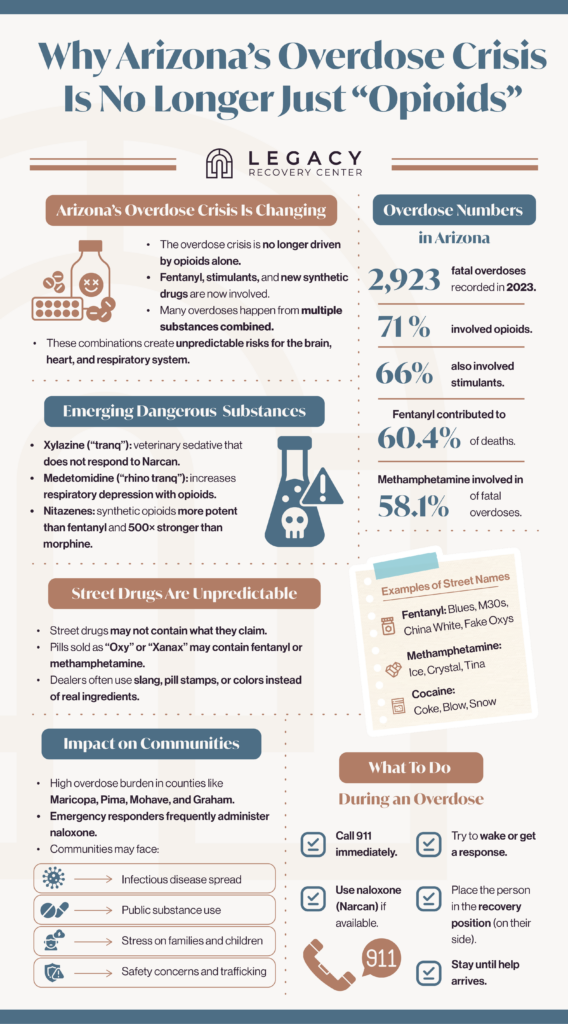
- 2,923 fatal overdose events were recorded in Arizona in 2023.
- 71% involved opioids, and around 66% also involved stimulants.
- CDC data found xylazine, detected in fentanyl-involved deaths, rose from 3% in early 2019 to 11% by mid-2022.
- Illicit fentanyl contributed to about 60.4% of overdose deaths.
- Methamphetamine was involved in 58.1% of fatal overdoses, making it one of the most common substances found alongside opioids.
Illicit Drugs in Arizona: Understanding The Current Landscape
While fentanyl has remained a leading driver of overdose deaths, the drug landscape is rapidly changing as new substances enter the supply. Clinicians are increasingly seeing emerging drugs such as nitazenes, xylazine, medetomidine, and other synthetic additives mixed with opioids and stimulants, creating a more unpredictable overdose risk [1][4].
Xylazine (“tranq”): a veterinary sedative that can cause severe sedation and skin wounds and does not respond to Narcan.
Medetomidine (“rhino tranq”): another emerging veterinary tranquilizer that deepens respiratory depression when mixed with opioids.
Nitazenes: a newer class of synthetic opioids that is much more potent than fentanyl and 500 times more potent than morphine.
Buying from The Street Is Unreliable
Traditional drug names (and even familiar pill stamps) don’t reliably describe what someone is actually taking anymore. Dealers and buyers often use slang, pill markings, or color-based packaging instead of chemical identity.
That’s why something sold as “Oxy” or “Xanax” may actually contain fentanyl, methamphetamine, or other adulterants, making older naming conventions misleading and, in some cases, deadly.
Common Street Names for Drugs
- Fentanyl: Blues, M30s, China White, “Mexican Oxy,” Fetties, Freddy/Fredy, Fake Oxys
- Counterfeit pills (varied contents): Often sold as Xanax, Vicodin, Adderall, Percs/Oxy
- Methamphetamine: Ice, Crystal, Tina, Speed, Crank, L.A. Glass, Stove Top
- Cocaine / Crack: Coke, Blow, Snow, Crack Rock, Coca, Yayo
The Impact on Public Health and Safety
Arizona continues to carry a significant overdose burden, with synthetic opioids still playing a central role. The impact is especially felt in southern and border-region counties, including Maricopa, Pima, Mohave, and Graham, where trafficking routes and drug availability contribute to higher exposure and risk.
Hospitals and emergency responders regularly handle repeated non-fatal overdose calls tied to fentanyl, which drives frequent naloxone administration and adds significant pressure to already burnt-out EMS and emergency department teams.
Beyond the overdose numbers, communities may see increases in infectious disease spread, more visible substance use in public spaces, increased emotional stress on families and children, and safety concerns related to violence, trafficking, and unstable housing in areas with limited access to support services [5].
What Are Arizona Communities Doing to Address the Drug Crisis?
Across Arizona, public health agencies, law enforcement, and community organizations are working together to respond to the ongoing overdose crisis and improve access to care. These focus not only on reducing overdose deaths but also on expanding education, lowering stigma, and connecting people with practical support and treatment options.
Arizona has expanded access to naloxone (Narcan), a medication that can reverse opioid overdoses, through broad distribution efforts led by the Arizona Department of Health Services. While fentanyl testing strips are used by some community organizations, statewide distribution programs remain more limited compared to naloxone initiatives.
Many recovery-focused initiatives also address underlying stability. Local organizations provide case management, food and hygiene assistance, job training, and other supportive services that can help reduce the everyday stressors often linked to substance use. While these programs aren’t always labeled as addiction-specific, they play an important role in improving safety and creating pathways toward recovery [6].
Improving access to behavioral health treatment, especially in rural areas, remains a key priority. Telehealth services and virtual treatment programs are helping connect people to therapy, medication-assisted treatment, and ongoing recovery support when travel or provider shortages create barriers.
State and federal funding continues to support mobile services and expanded MAT programs designed to bring care directly into communities that lack traditional clinical infrastructure.
How To Handle an Overdose
- Call 911. If you think someone may be overdosing, it’s safest to involve emergency services immediately. Acting early can save a life.
- Try to get a response. Say the person’s name loudly, tap or shake their shoulders, or press your knuckles against the center of their chest to see if they react.
- Use naloxone (Narcan) if you have it. This medication can temporarily reverse opioid effects by blocking opioid receptors and is safe to give even when you’re not completely sure opioids are involved.
- Turn the person onto their side. The recovery position helps keep the airway open and lowers the risk of choking if vomiting occurs.
- Remain with them until help arrives. The effects of naloxone may fade after 30–90 minutes, and symptoms can come back.
- Provide CPR if you know how. If the person isn’t breathing normally, these steps can help keep oxygen flowing until first responders take over.
Integrated Drug & Alcohol Treatment in Arizona at Legacy Recovery Center
Legacy Recovery Center is a highly rated, premier addiction and mental health treatment center in Arizona. Legacy is owned and operated by two psychiatrists with over 40 years of combined experience, complemented by a robust therapeutic team.
We’re unique among residential treatment centers thanks to our ability to help people suffering from mental health and substance abuse issues. Our expert psychiatric team is equipped to treat multiple issues concurrently, focusing on your specific needs.
Sources
[1] DEA. 2022. DEA Reports Widespread Threat of Fentanyl Mixed with Xylazine.
[2] Arizona Department of Health. 2025. Opioid Overdoses Surveillance Report, Arizona.
[3] CDC. 2023. Illicitly Manufactured Fentanyl–Involved Overdose Deaths with Detected Xylazine.
[4] Levine, M. et al. (2025). Nitazenes: An Old Drug Class Causing New Problems. Missouri medicine, 122(4), 329–333.
[5] Byrne, M. et al. (2013). The impact of substance use disorders on families and children: from theory to practice. Social work in public health, 28(3-4), 194–205.
[6] Arizona Department of Health Services. 2022. Arizona’s Ongoing Fight Against Fentanyl and Overdose Fatalities.